 Call us today


The brown marmorated stink bug (Halyomorpha halys) has become one of the most recognizable invasive species affecting Midwest homeowners and growers. Originally from east asia—specifically China, Japan, and Korea—this pest has spread across most of the United States since its initial detection in Pennsylvania in 1998. Today, infestations are common throughout Iowa, Missouri, Nebraska, and Kansas.
Correct brown marmorated stink bug identification matters because this species damages over 300 host plants, including fruit trees, vegetable crops, soybeans, and many ornamental plants. Misidentifying it as one of the native stink bugs” data-term-hl-color=”yellow” data-term-hl-usage=”24″ data-term-hl-min-usage=”34″ data-term-hl-max-usage=”77″ data-term-hl-match=”stink bugs-671″ data-term-hl-animatable=”false”>stink bugs can lead to wasted effort or harm to beneficial insects. This article focuses on visual identification and basic biology, with professional management available through Miller Pest Solutions for residential and commercial properties.
Key identification challenges:
Superficial resemblance to other stink bugs like the brown stink bug and rough stink bugs
Seasonal appearance changes as adults migrate indoors during fall
Size variability (adults range 12–17 mm) and color shifts from mottled brown to grayish-tan
Fast Identification Guide (How to Recognize BMSB Quickly)
When you spot a suspected brown marmorated stinkbug, check these key features for rapid recognition:
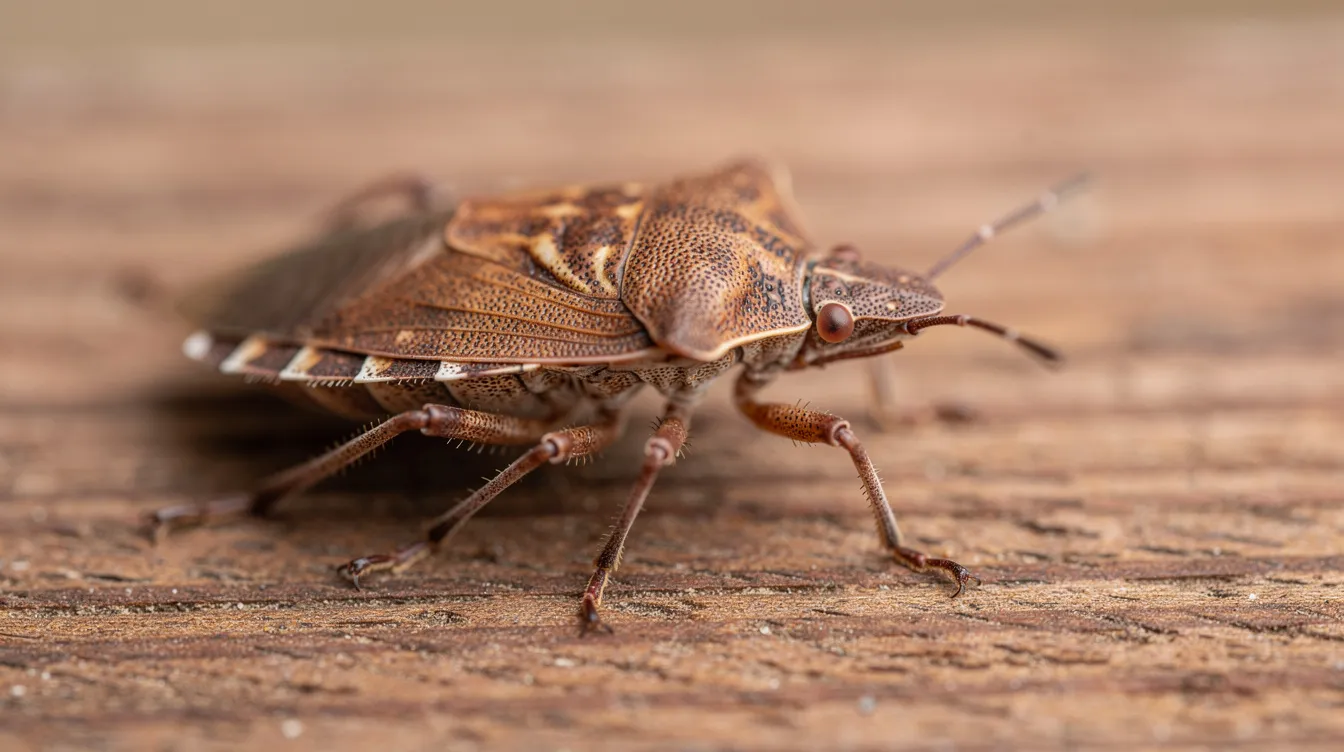
Shield-shaped body approximately 14–17 mm long (about the size of a dime)
Mottled brown “marbled” pattern on the back—this is what “marmorated” means
White banding on antennae—two distinct light and dark bands, especially on the 4th segment
Alternating light and dark rectangular patches along the lateral margins of the abdomen
Unpleasant odor when crushed, often described as sharp or cilantro-like
Adults typically cluster on sunny walls and around windows from late September through October in the Midwest. If you’re unsure of your identification, photograph the suspected bugs and contact Miller Pest Solutions for confirmation.
Taxonomy and Origin
The brown marmorated stink bug belongs to Order Hemiptera (true bugs), Family Pentatomidae (stink bugs), with piercing sucking mouthparts characteristic of this group. First detected in Allentown, Pennsylvania, in 1998—though likely arriving several days or years earlier via cargo shipments—it spread steadily westward.
Native range: China, Japan, Korea, Taiwan
U.S. detection: 1998 (Pennsylvania)
Midwest arrival: Confirmed in most states by mid-2010s, including Miller Pest Solutions’ service area
Adult Brown Marmorated Stink Bug: Key Identification Features
Adults display the classic shield-shaped (pentagonal) body typical of stink bugs. They measure 14–17 mm long from the black head to wing tips, roughly 8 mm wide. The dorsal surface shows brown, gray, and off white marbling, while the underside appears pale gray to creamy white.
Most reliable field marks:
Two pale/whitish bands on the antennae (4th and 5th segments)
Alternating dark bands and light rectangular patches along the exposed abdomen edge
Dark banding at the wing tips with occasional reddish or metallic green spots
Brown legs with faint white mottling
The scent glands located on the underside of the thorax and abdomen release the characteristic pungent odors when the insect is disturbed. This defensive secretion contains aldehydes that produce a persistent smell on fabrics and surfaces.
Nymphs and Eggs: Identifying Immature Stages
Identifying immature stages is critical for growers because bmsb damage often begins before adults emerge in large numbers. Nymphs feed on fruit, ornamental plants, and agricultural crops throughout the growing season.
Eggs:
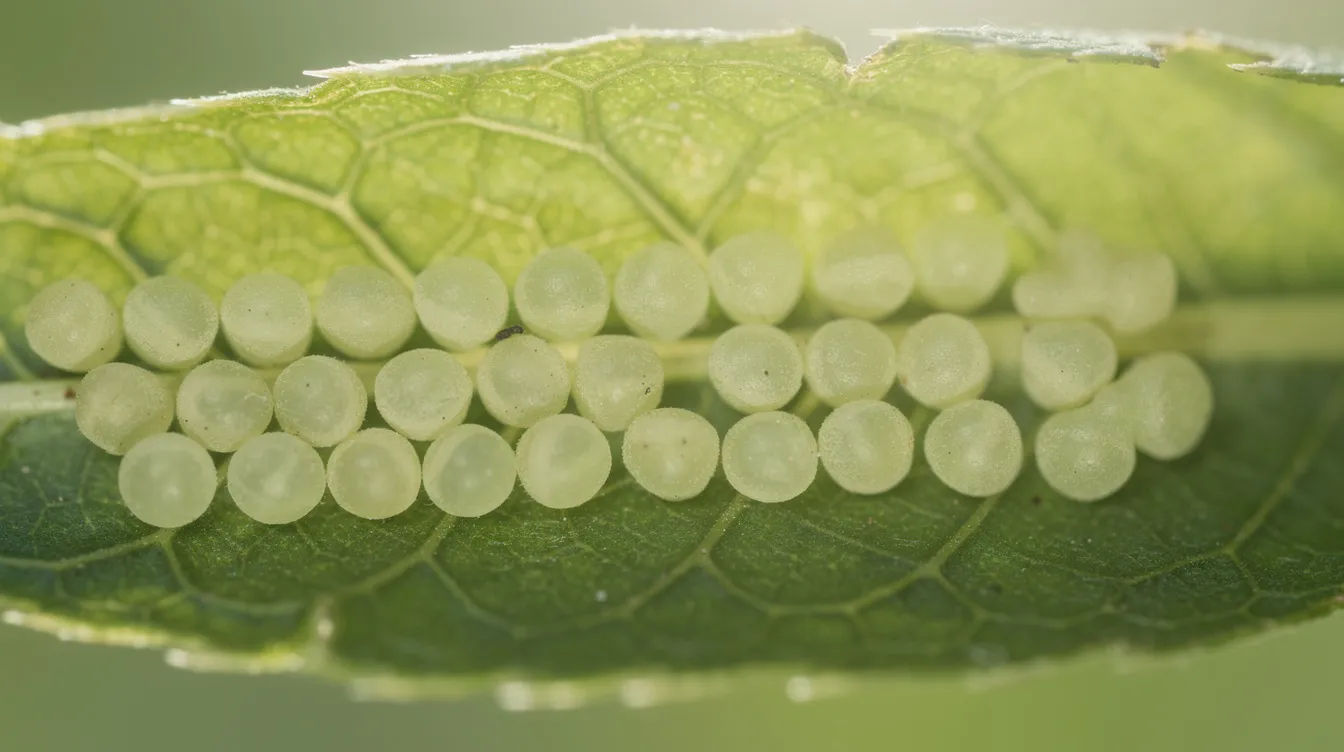
Barrel-shaped, approximately 1.6 mm long
Pale green to off white when newly laid
Laid in tight clusters of 20–30 (typically 28) on the underside of leaves
When eggs hatch approaches, dark spots (developing nymph heads) become visible
First instars:
Very small (around 2.5 mm), clustering near the egg mass after hatching
Yellow red and black patterns with red eyes
Tick-like appearance, rounded and flattened
Later instars (2nd–5th):
Progress through five nymphal instars, growing to about 12 mm
Body becomes more shield-shaped and mottled brown
White banding develops on legs and antennae resembling adults
Life Cycle, Seasonal Activity, and Typical Habitats
The brown marmorated stink bug completes its life cycle through egg, five nymphal instars, and adult stages. Research suggests development takes 5–6 weeks per generation under optimal conditions. In cooler Midwest climates, there’s typically one main generation annually, with a possible partial second in warm years—two generations maximum.
Seasonal timing:
Late april–mid-May: Adults emerge from overwintering sites when soil temperatures exceed 10°C
May–August: Females lay eggs on host plants; nymphs active in fields and gardens
September–October: Adults migrate to buildings, aggregating on warm exterior walls
Winter: Adults hibernate in structures, under bark, or in woodpiles until spring
Preferred outdoor habitats include tree fruits (apples, peaches, pears), citrus fruits in warmer regions, vegetable crops (tomatoes, peppers, beans, sweet corn), soybeans, and other plants including common weeds.
Common Look-Alike Species and How to Tell Them Apart
Several native stink bug species in the Midwest resemble the marmorated stink bug, making careful identification essential. Misidentification can lead to unnecessary insecticides applications that kill beneficial insects.
Brown marmorated stink bug:
Two clear pale bands on antennae
Bold alternating light/dark rectangles along abdomen edge
Smooth-edged pronotum (shoulder area)
Native brown stink bugs (Euschistus servus):
Lack distinct double antennal bands
Abdomen edges more uniformly colored
Generally smaller (13–14 mm)
Rough stink bugs (Brochymena spp.):
Rough, granulated texture on body
Shoulder spines or “teeth” on pronotum
Uniform gray-brown without crisp marbling
Note that the spined soldier bug (Podisus maculiventris) is a beneficial predator—do not kill these helpful insects.
Indoor Behavior and Nuisance Issues
The brown marmorated stink bug becomes a nuisance pest when it seeks overwintering sites in fall. Adults aggregate on sunny exterior walls, around windows, soffits, and rooflines on warm days above 15°C.
Important facts:
BMSB does not reproduce, feed, or cause structural damage indoors
They release strong odors when disturbed, handled, or crushed
Large numbers in attics and wall voids can be distressing
Dead bugs may accumulate in hidden spaces
Health Considerations
BMSB does not bite, sting, or transmit diseases. However, defensive secretions can cause minor reactions in sensitive individuals:
Allergic rhinitis (runny nose) or conjunctivitis (itchy eyes) from airborne compounds
Mild skin irritation if crushed directly on skin
Individuals sensitive to cockroach allergens may react more strongly
Avoid crushing bugs by hand. Use gentle mechanical removal or contact a licensed pest professional.
Prevention and Exclusion Before Bugs Enter Buildings
The most effective control prevents entry through exclusion work completed in late summer before adults migrate:
Seal gaps around windows, doors, utilities, and fascia with exterior-grade caulk
Install door sweeps and weatherstripping on exterior and garage doors
Repair screens on windows, attic vents, and soffits (16-mesh minimum)
Targeted exterior insecticide applications may provide short-term relief but should be applied by licensed professionals like Miller Pest Solutions technicians due to limited residual effectiveness.
What to Do After Brown Marmorated Stink Bugs Are Inside
Once BMSB enters your home, focus on safe removal and preventing spread to living spaces:
Vacuum with a disposable bag (vacuum may retain odor temporarily)
Knock bugs into soapy water to kill without crushing
Seal interior gaps behind baseboards, around trim, and utility penetrations
Avoid routine indoor chemical control—it offers limited benefit and may cause issues with dead insects in wall voids. Miller Pest Solutions provides tailored interior assessment and treatment plans for recurring issues.
Miller Pest Solutions: Professional Identification and Control in the Midwest
Accurate brown marmorated stink bug identification is your first step toward effective control, especially when populations are large or mixed with similar species. Early detection prevents larger infestations.
Miller Pest Solutions services:
Professional assessment across Iowa, Missouri, Nebraska, and Kansas
Family- and pet-friendly treatment options targeting BMSB and seasonal pests
Exclusion recommendations and ongoing pest protection plans
Contact Miller Pest Solutions for same-day service if you’re experiencing fall stink bug invasions. Our local expertise in Midwest pest cycles delivers results that national competitors simply cannot match.


