 Call us today


If you’ve spotted a small, fast-moving rodent darting across your kitchen floor or found tiny droppings in your pantry, you’re likely dealing with a house mouse. For homeowners in Iowa, Missouri, Nebraska, and Kansas, accurate house mouse identification is essential because these small rodents are the most common species invading Midwest structures year-round. Miller Pest Solutions provides professional rodent control across the region, helping property owners distinguish house mice from other pests and eliminate infestations before they escalate.
Quick Answer: How to Identify a House Mouse Fast
The house mouse (Mus musculus) is a small, highly adaptable rodent that thrives inside homes and commercial buildings throughout the Midwest. Fast identification matters because house mice reproduce rapidly, and what starts as one or two mice can become a full house mouse infestation within weeks. Miller Pest Solutions offers local expertise to help Iowa, Missouri, Nebraska, and Kansas residents address mouse problems quickly and effectively.
Key visual identification points:
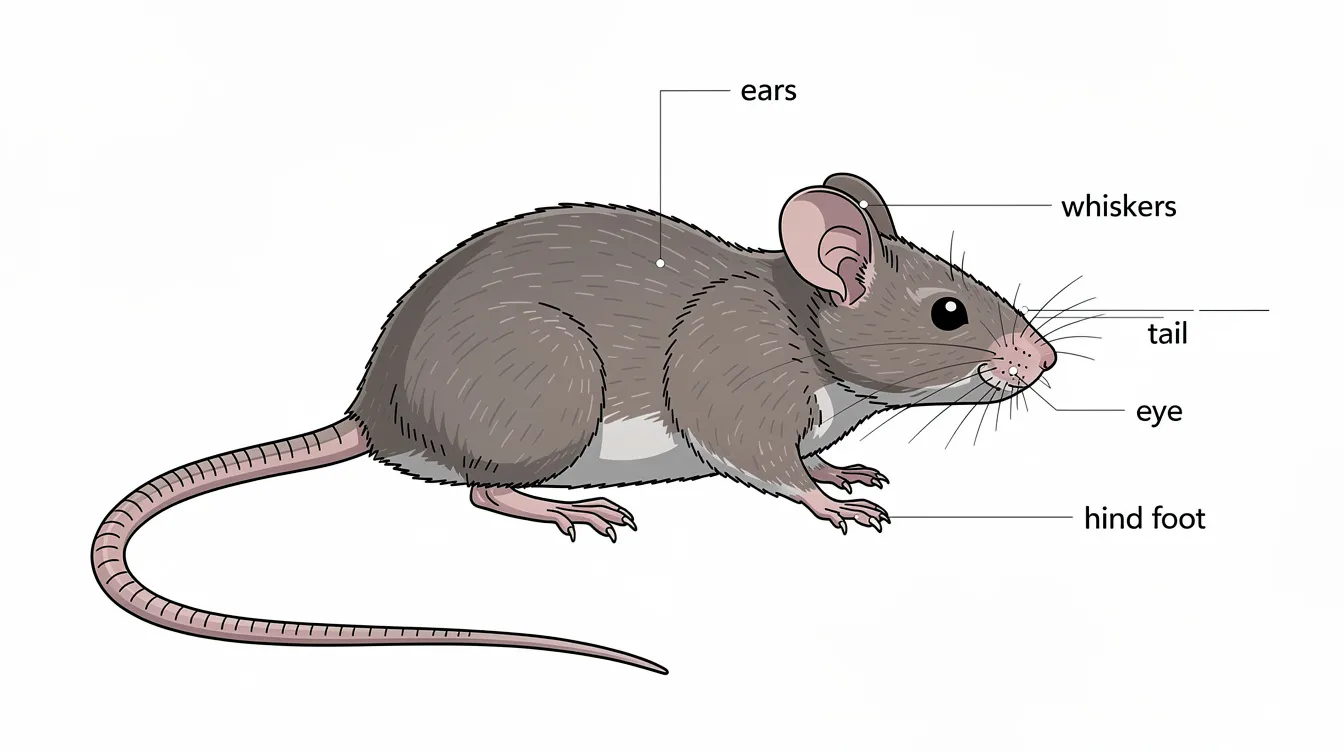
Body length of about 2.5 to 4 inches, with a hairless tail roughly the same length
Fur ranges from dusty gray to light brown, with a slightly lighter belly
Large ears relative to head size, rounded and sparsely haired
Pointed, triangular snout with small black protruding eyes
Slender, smooth-coated body weighing 12 to 30 grams
House mouse vs. other small rodents:
Deer mice have a bicolored tail (dark on top, white underneath), white feet, and a stark white belly—house mice are more uniform in color
Young rats appear heavier with thicker bodies, blunter snouts, larger feet, and coarser fur
Field mouse and wood mouse species typically stay outdoors and have different species characteristics
Midwest homeowners commonly find house mice first in kitchens (behind refrigerators and stoves), basements and crawl spaces, garages near stored items, and anywhere pet food or bird seed is accessible.
If these features match what you’re seeing, you’re likely dealing with house mice. Consider scheduling a professional assessment with Miller Pest Solutions.

What Is a House Mouse? (Mus musculus)
The house mouse is a small commensal rodent that has evolved to live alongside humans, thriving in structures that provide food and shelter. Scientifically known as Mus musculus, this species represents one of the most successful mammalian colonizers of human environments worldwide.
House mice are among the most prevalent structural pests in the central United States, including Iowa, Missouri, Nebraska, and Kansas. They infest residential homes and commercial buildings alike, exploiting abundant food sources and protected nesting sites.
Originally native to Central and Western Asia, house mice spread globally through human-mediated transport via grain shipments and cargo ships. Records indicate they established populations in North America by the early 1700s, quickly adapting to the variable Midwest climate.
Color variants that homeowners describe as “brown mice” or “black mice” are almost always the same species—just different color forms influenced by genetics and environment. Whether solid gray, light brown, or darker shades, they share identical behaviors, risks, and control requirements.
Their close association with stored food supplies—cereals, grains, livestock feed, and pet food—makes them a year-round problem in the Midwest rather than a seasonal nuisance.
Physical Identification: What Does a House Mouse Look Like?
Accurate mouse identification helps distinguish house mice from deer mice and young rats before selecting a control approach. Understanding these physical differences prevents wasted effort on ineffective methods.
Body size and proportions:
Adult weight: approximately 12 to 30 grams (½ to 1 ounce)
Body length: 2.5 to 4 inches
Tail length: roughly equal to or slightly longer than body (2.75 to 4 inches)
Fur color and texture:
Ranges from dusty gray to light brown or dark gray
Usually uniform color on back with slightly lighter underside
Smooth, short coat rather than shaggy
Head and ear characteristics:
Small, pointed triangular snout
Large ears relative to head size (rounded, sparsely haired)
Prominent small black eyes that detect movement effectively
Tail features:
Long, thin, nearly hairless tail with visible scale rings
Usually same color as back fur throughout
Unlike deer mice, which have a distinctly bicolored tail
Droppings as identification clues:
Rod shaped, about 1/8 to 1/4 inch long
Pointed at both ends, dark in color
Commonly found along walls, in cabinets, under sinks, and near food storage
Fresh droppings appear shiny; dried ones are hard and dull
To distinguish house mice from young rats: house mice have slimmer bodies, proportionally larger ears and eyes, smaller feet, and a finer head shape. Rats appear more heavily built even when small, with coarser fur and blunter snouts.
Brown House Mice vs. Black House Mice
Homeowners often describe house mice by color, referring to “brown mouse” or “black mouse” sightings, even though these are the same species exhibiting natural color variation.
Light brown house mice:
Light to medium brown fur with pale gray or buff belly
2.5 to 4 inch body length
Commonly found in kitchens, pantries, and basements where lighting reveals their coloring
Darker or black fur house mice:
Dark gray to nearly black fur with slightly lighter underside
Same 2.5 to 4 inch body range
Often noticed in garages, storage rooms, attics, or at night along baseboards
Color alone does not change behavior or risk level. Both variants contaminate food, damage electrical wires and insulation, and spread harmful bacteria equally. Lighting conditions in dim basements, garages, or attics can make gray mice appear darker, so don’t over-focus on exact shade when identifying house mouse activity.
Behavior & Biology: How House Mice Live
Understanding behavior and biology explains why house mouse infestations grow quickly inside Midwestern homes and commercial settings. Their rapid reproduction and adaptable habits make early intervention critical.
Feeding behavior:
Omnivorous but strongly prefer grains, seeds, cereals, and pet food
House mice eat many small meals throughout the day and night
Consume approximately 15 to 20% of body weight daily (3 to 5 grams)
Will contaminate food supplies far exceeding what they actually consume
Activity patterns:
Primarily nocturnal, most active during daylight hours only when populations are high
Highly inquisitive and exploratory, investigating new objects in their territory
Excellent climbers that navigate various environments with ease
Movement abilities:
Squeeze through gaps as small as 1/4 inch (pencil-sized)
Jump up to 12 inches vertically
Run along pipes, wires, and wall voids as “highways”
Gain entry through utility penetrations, door gaps, and foundation cracks
Nesting habits:
Build nests in warm, sheltered locations close to a food source
Use finely shredded paper, fabric, insulation, and other fibrous material as nesting materials
Common sites: wall voids, attics, under appliances, inside stored boxes
Reproduction (life cycle):
Reach sexual maturity at 6 to 8 weeks
Breed year-round indoors with rapid reproduction rates
Litter size averages 5 to 10 pups, with 5 to 10 litters annually
Lifespan: approximately 6 to 12 months in protected structures
Common House Mouse Habitats in Midwest Properties
Building design and climate in Iowa, Missouri, Nebraska, and Kansas influence where house mice hide and establish nesting sites.
Typical indoor locations:
Kitchens and pantries (behind cabinets, under stoves, near human food storage)
Basements and crawl spaces (along sill plates and foundation walls)
Utility rooms and furnace rooms
Attached garages (among debris piles and stored items)
Drop ceilings and attics
Typical commercial settings:
Restaurants and food processing areas
Grain storage facilities and agricultural areas with feed rooms
Warehouses and other structures with stored goods
Office drop ceilings and maintenance rooms
Seasonal patterns:
Increased indoor activity occurs in fall and early winter as outdoor temperatures drop. Mice seek warmth and consistent access to store food sources, making Midwest properties particularly vulnerable during temperature transitions.
Real-world scenarios:
Nest discovered behind a refrigerator, built from shredded insulation
Fresh gnaw marks on pet food bags in the garage
Rub marks along basement baseboards near utility entry points
House Mouse Diet and Foraging Habits
House mice are opportunistic feeders, making them a persistent threat to food supplies in homes, commercial buildings, and agricultural settings. These small rodents are omnivorous, meaning house mice eat a wide range of foods—from seeds, grains, and fruits to insect larvae and even household items like paper or soap. Their adaptability allows them to thrive in various environments, always seeking out the most accessible and nutritious food sources.
A single house mouse can consume up to 20% of its body weight in food each day. They are especially attracted to foods high in carbohydrates and proteins, such as cereals, pet food, and pantry staples. House mice are notorious for contaminating food supplies, not just by eating but also by leaving behind droppings, house mouse urine, and hair, which can lead to food poisoning and other health risks for humans and pets.
Their foraging habits are highly exploratory—mice use their keen sense of smell and ability to detect movement to locate food, often venturing into kitchens, pantries, storage rooms, and even commercial food processing areas. Because they nibble on many different items, house mice can contaminate food far beyond what they actually consume, making early detection and removal critical to prevent health hazards.
In addition to human food, house mice will gnaw on non-food materials such as glue, soap, and paper, which can further damage property and increase the risk of a house mouse infestation. Their ability to survive on minimal water—often getting enough moisture from the food they eat—makes them even more resilient in a variety of environments.
House Mouse Life Cycle
The house mouse is a common species known for its rapid reproduction and adaptability, making it a challenging pest to control in both residential and commercial settings. Understanding the house mouse life cycle is key to effective pest control, as their ability to multiply quickly can turn a minor mouse problem into a full-blown infestation in a matter of weeks.
House mice breed year-round, with a single female capable of producing up to 10 litters per year. Each litter typically contains 5 to 6 pups, though larger litters are possible. After a short gestation period of just 19 to 21 days, the young mice are born blind and hairless, relying on their mother for warmth and nourishment. Within two weeks, their eyes open and they begin to explore their surroundings.
One of the reasons house mice are such a persistent pest is their early sexual maturity—mice can begin breeding as soon as 6 to 8 weeks old. This rapid reproduction cycle, combined with their ability to thrive in various environments, means that populations can grow exponentially if left unchecked.
The average lifespan of a house mouse is about 9 to 12 months in the wild, though some may live longer in protected indoor environments. Their highly adaptable nature allows them to survive and reproduce in a wide range of conditions, from rural barns to urban commercial buildings.
For property owners, recognizing the speed and scale of the house mouse life cycle underscores the importance of prompt, professional pest control. Early intervention is essential to break the cycle and prevent recurring infestations, especially in environments where food and shelter are readily available.
House Mouse Risks & Damage
House mice are more than a nuisance—they create genuine health risks, property damage, and economic losses that compound over time.
Health concerns:
Mouse droppings and house mouse urine contaminate food-contact surfaces
Transmit pathogens including Salmonella and lymphocytic choriomeningitis virus (LCMV)
Can carry diseases that cause food poisoning in humans
Mouse allergens (urine and dander) trigger allergic reactions and exacerbate asthma
While less common than deer mice, house mice have been associated with hantavirus pulmonary syndrome concerns
Property damage:
Gnaw marks on electrical wires create fire hazards and short-circuit risks
Chew appliance cords, gas lines, insulation, and drywall
Damage stored items including cardboard boxes, fabrics, and wood trim
A dead mouse hidden in wall voids creates unpleasant decomposition odors
Economic impact:
Loss of stored pantry goods, pet food, and livestock feed
Cleanup and repair costs accumulate rapidly
Commercial buildings risk inventory loss and regulatory compliance violations
Characteristic musky odor permeates infested spaces, affecting property appeal
Early identification and intervention by a professional pest control company like Miller Pest Solutions prevents minor activity from becoming a large, costly infestation.
How to Tell House Mice from Other Rodents
Misidentifying different species—confusing deer mice, voles, or young rats with house mice—leads to ineffective control efforts and wasted resources.
Deer mice comparison:
Bicolored tail (dark on top, white underneath) vs. house mouse’s uniform tail color
White feet and sharply demarcated white belly
Larger eyes relative to head size
More associated with fields, outbuildings, and rural areas
Greater concern for certain diseases including hantavirus
Young rat comparison (Norway or roof rats):
Larger head and feet, even when small
Thicker body and tail with blunter snout
Coarser, shaggier fur
Droppings are larger (capsule-shaped rather than rod shaped with pointed ends)
Roof rats have relatively small ears compared to their head size, which helps distinguish them from house mice
Other small rodents:
Voles typically remain outdoors in yards and landscaping
Have smaller ears, blunter noses, and stockier builds
Compared to house mice, which have proportionally larger ears, voles and some other rodents‘ small ears are a distinguishing feature
Wood mouse and field mouse species generally avoid indoor habitation
If you’re unsure about identification, collect safe evidence—photos of the animal, droppings, or damage—and share with a Miller Pest Solutions technician for confirmation before setting traps or implementing control measures.

Signs of a House Mouse Infestation
Many homeowners never see mice directly, so recognizing indirect evidence is crucial for early detection. Mice are nocturnal, and significant populations often exist before a single mouse is spotted.
Common signs to look for:
Small, dark droppings along walls, in cabinets, under sinks, and near food storage
Fresh gnaw marks on wood, plastic, food packaging, or stored goods
Nesting materials: finely shredded paper, fabric, or insulation in secluded spots
Greasy rub marks along frequently used runways (baseboards, pipes)
Sounds and smells:
Scratching or scurrying noises in walls, ceilings, or under floors at night
Faint squeaking sounds
Persistent characteristic musky odor in pantries, utility rooms, or enclosed spaces
Evidence on stored items:
Chewed corners on cardboard boxes
Damaged pet food bags or bird seed containers
Nests discovered in stored fabrics, holiday decorations, or debris piles
Seeing a mouse during daylight hours or spotting multiple mice within a week typically indicates a larger population hidden in wall voids, crawl spaces, or other concealed areas.
Quick assessment checklist:
[ ] Droppings present (fresh/shiny = active infestation)
[ ] Gnaw marks visible on food packaging or structures
[ ] Rub marks or grease trails along walls
[ ] Nesting materials found
[ ] Musky odor detected
[ ] Sounds at night (scratching, scurrying)
[ ] Daytime mouse sightings
Prevention & When to Call Miller Pest Solutions
Once you’ve completed accurate house mouse identification, focus shifts to prevention and, if necessary, professional intervention to remove mice effectively.
Basic prevention for homeowners:
Seal gaps 1/4 inch or larger around doors, windows, utility lines, and foundations
Use rodent-resistant materials: metal flashing, concrete, steel wool backed by caulk
Store food in sealed glass or metal containers (not plastic or cardboard)
Keep pet food and bird seed in secure metal containers
Reduce clutter where mice can build nests
Sanitation practices:
Sweep and vacuum crumbs regularly from kitchen floor and dining areas
Wipe down counters and promptly clean spills
Keep trash in tightly lidded containers
Eliminate debris piles in garages and storage areas
DIY limitations:
Mouse traps (snap traps) and properly placed glue boards can help with very small, early-stage problems. However, improper placement reduces effectiveness, and certain products pose safety concerns around children and pets. Set traps along walls where activity is detected, perpendicular to travel paths.
When professional help is needed:
Larger or recurring infestations in homes or commercial buildings across Iowa, Missouri, Nebraska, and Kansas typically require a tailored rodent control program. Miller Pest Solutions uses family- and pet-friendly methods to address mouse problems comprehensively.
Miller Pest Solutions advantages:
Local Midwestern expertise with understanding of regional pest patterns
Same-day or fast scheduling when available
Ongoing rodent protection plans for year-round prevention
assessment-based recommendations addressing entry points, nesting sites, and conducive conditions
Service guarantees and family-safe treatment approaches
Contact Miller Pest Solutions today for an assessment or quote if you suspect house mouse activity or want proactive rodent prevention. Accurate identification is the first step—professional intervention ensures the problem is resolved completely before minor activity becomes a structural infestation.


