 Call us today


Spotting wasps around your Iowa, Missouri, Nebraska, or Kansas home raises an immediate question: what are you dealing with? Paper wasp identification is the first step toward making smart decisions about safety and control.
Paper wasps, along with ants and bees, belong to the order Hymenoptera, meaning they are closely related within this diverse insect group.
This guide breaks down how to recognize paper wasps, distinguish them from lookalikes, understand their behavior, and know when professional help from Miller Pest Solutions makes sense.
Quick guide: is it a paper wasp?
This fast checklist helps Midwest homeowners worried about wasps near homes, decks, and play areas confirm whether they’re seeing paper wasps.
Key identification traits:
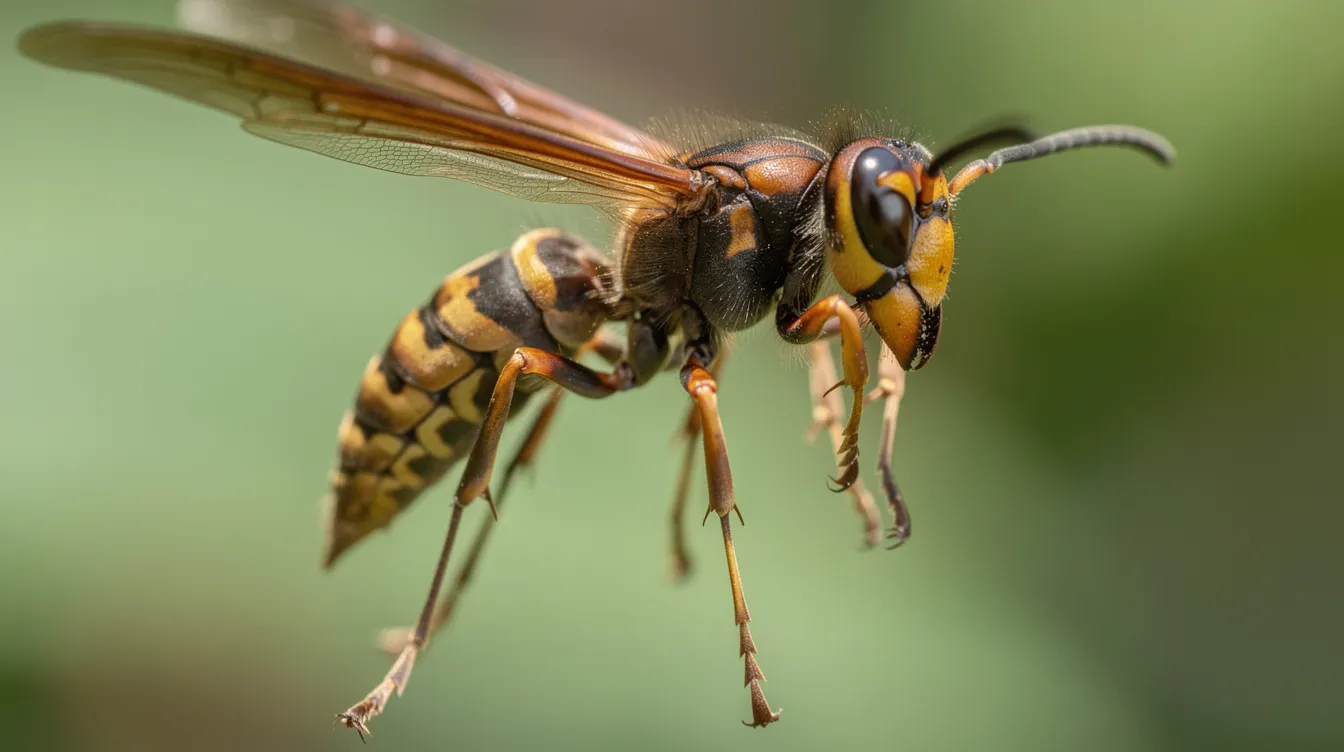
Slim “wasp-waist” body with a narrow connection between thorax and abdomen
Long legs that dangle noticeably during flight
Smooth, shiny body with little to no fuzz
Coloration typically brown or black with yellow markings; some species show reddish or orange accents
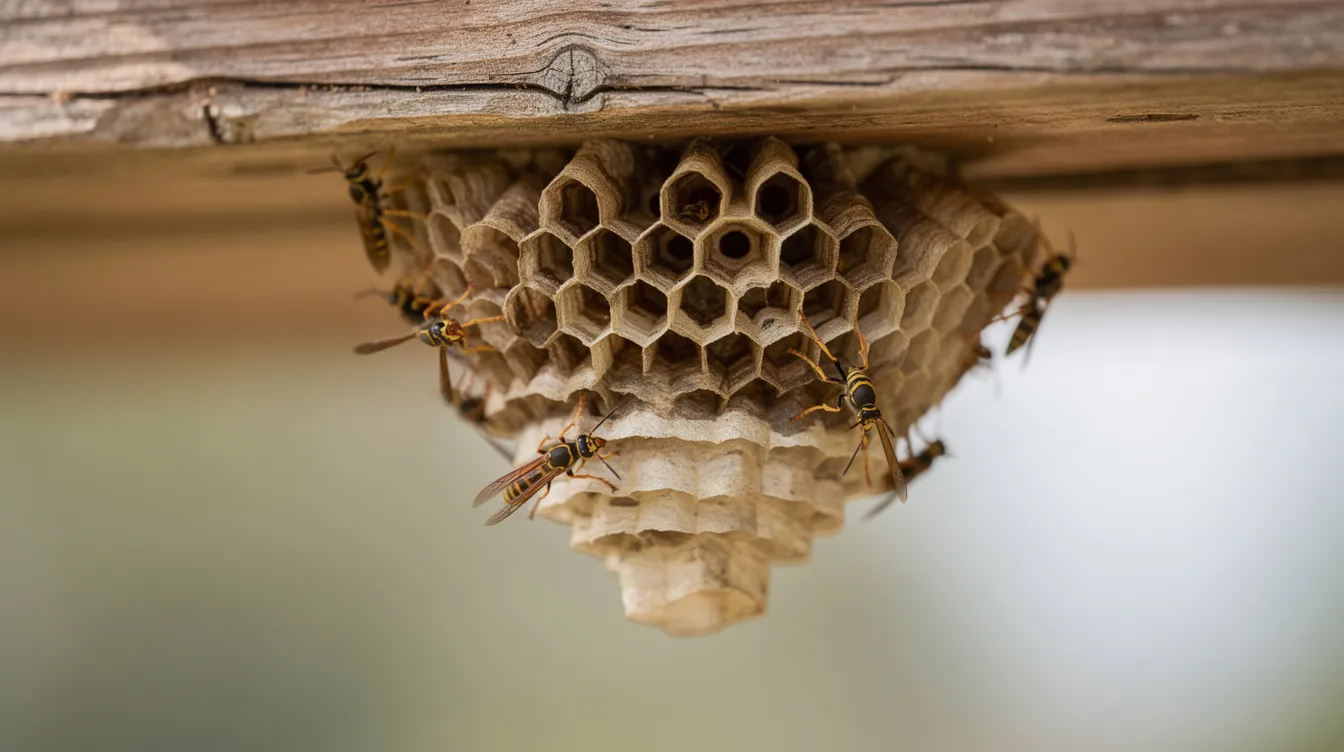
Exposed, umbrella shaped nests under eaves, porch ceilings, or deck railings
Calm behavior on the nest unless disturbed
Quick comparisons:
Yellowjackets are stockier with shorter legs tucked during flight and build enclosed nests, often underground
Bald-faced hornets are larger (up to 1⅜ inches) with enclosed aerial nests
Honey bees are fuzzy with pollen-collecting hairs and live in enclosed hives
Typical size for species in the Midwest: about 5/8–3/4 inch (16–20 mm).
If you’re unsure or notice heavy activity around doors or playground equipment, Miller Pest Solutions can confirm identification during an assessment.
What is a paper wasp?
Paper wasps are social insects in the family Vespidae that build exposed, papery comb nests on buildings, trees, and structures throughout the Midwest. They live in small colonies compared to other social wasps.
The common name comes from distinctive nests built from chewed wood fibers mixed with saliva, which dry into gray or tan papery nests
Most paper wasps belong to the genus Polistes (paper wasp polistes), with around 22 species in North America and hundreds worldwide. Other related wasps in the Vespidae family include mason wasps, which have different nesting behaviors but are sometimes confused with paper wasps.
Homeowners typically encounter only a few species regularly
Colonies remain modest, often ranging from a few dozen wasps to about 100 individuals per season—far smaller than yellowjacket colonies that can exceed thousands
Paper wasp identification: key features
This section breaks down the visual traits homeowners can use to identify paper wasps around their property.
Color and pattern: Generally dark brown or black with yellow markings; some native paper wasp species show rusty-red or orange areas
Size: Common species in Iowa, Missouri, Nebraska, and Kansas measure about 5/8–3/4 inch (16–20 mm), slightly longer and slimmer than yellowjackets
Shape: Narrow “wasp waist” (petiole) between thorax and abdomen; elongated, tapered abdomen
Legs and wings: Long legs that dangle noticeably in flight; two pairs of transparent wings that fold lengthwise at rest
Texture: Smooth, shiny bodies with little or no hair—unlike fuzzy bees
Behavior near nests: Often calmly walking on open cells or hanging beneath the nest; wasps typically don’t swarm unless disturbed
Common paper wasp species in the Midwest
Several species occur across the central U.S., but homeowners most often see european paper wasps and native species like northern paper wasps. All can deliver paper wasp stings, so identification should happen from a safe distance or through a trained technician from Miller Pest Solutions.
European paper wasp (Polistes dominula)
The european paper wasp is an invasive species first recorded in North America near Boston in 1978, now well established across Iowa, Missouri, Nebraska, and Kansas.
Coloration: Black body with bright yellow markings, closely resembling yellowjackets at first glance
Distinguishing traits: Slimmer body, long legs that dangle in flight, and orange tipped antennae that yellowjackets lack
Size: About 3/4–7/8 inch (19–22 mm)
Nesting habits: Builds open, umbrella-shaped nests under eaves, deck rails, porch ceilings, behind shutters, and inside light fixtures
Ecological impact: Has contributed to declines of some native polistes populations; preys heavily on caterpillars, including monarch butterfly larvae in urban areas
Northern paper wasp (Polistes fuscatus)
Northern paper wasps are a native paper species historically common across the northern and central U.S., including areas served by Miller Pest Solutions.
Appearance: About 3/4 inch (19–22 mm) with a dark brown to black body and lighter brown, coppery, or subdued yellow markings
Facial markings: Variable, ranging from yellow to reddish-brown
Nesting choices: Open umbrella-style nests under overhangs, in barns, sheds, and on tree branches
Competition: May be displaced where european paper wasps are dense but still common in rural or natural settings
Other regional paper wasps homeowners may see
Other Polistes sp. such as Polistes dorsalis and related species may occur throughout the Midwest.
Generally slimmer, long-legged wasps with tan, yellow, or reddish markings
Build the same exposed comb-style nests
Fine-scale identification often requires close assessment by entomologists or experienced pest professionals
For practical safety decisions, the key distinction is between paper wasps and more aggressive yellowjackets or bald-faced hornets
Paper wasp nests: what they look like and where they appear
Nest structure and placement are often the easiest way to tell paper wasps from other insects. Paper wasps build nests that are umbrella-shaped and constructed from chewed wood fibers and saliva.
Shape: A single layer of exposed hexagonal cells forming an open “umbrella” or fan, typically 1–6 inches across. Paper wasp nests typically consist of a single layer of hexagonal cells arranged side-by-side, suspended by a single stalk from an overhanging shelter.
Material: Gray to brown papery comb made from wood fibers and saliva mixed together; no outer envelope (unlike many hornet or yellowjacket nests)
Common locations: Under roof eaves, soffits, porch ceilings, deck railings, play structures, window frames, light fixtures, and inside hollow fence posts
Founding: Nests are started in spring by a single fertilized queen and grow through summer; they’re rarely reused the following year. Nests made early in the season by founding queens are easier to eliminate before workers are produced.
Hidden nests: New nests in grills, stored lawn furniture, or equipment are often discovered only when disturbed, increasing sting risk
Social structure and communication in paper wasps
Paper wasps, including both European paper wasps and native paper wasp species, are remarkable for their sophisticated social organization and intricate communication systems. At the core of every colony is a clear division of labor, with female wasps taking on the majority of responsibilities that keep the colony thriving. The queen, a dominant female, is responsible for egg laying and setting the pace for colony growth, while her daughters—known as female workers—handle the essential tasks of foraging, nest construction, and caring for developing wasp larvae.
Male wasps, in contrast, have a more limited role within the colony. Their primary function is to mate with new queens later in the season; they do not participate in nest building, foraging, or brood care. This clear separation of duties allows paper wasp colonies to operate efficiently, with each member contributing to the survival and success of the group.
Communication is vital for coordinating these activities. Paper wasps use a combination of chemical signals (pheromones), body movements, and even subtle sounds to share information. For example, when a forager discovers a rich source of nectar or soft bodied insects like caterpillars, she may perform a specific movement or release pheromones upon returning to the nest. This alerts other female workers to the location and quality of the food, ensuring that the colony’s brood receives the nourishment needed to develop into healthy adults.
The construction of paper wasp nests—often called umbrella wasps due to their distinctive umbrella-shaped design—is a collaborative effort. Female workers gather chewed wood and mix it with saliva to create the paper-like material that forms the nest. These nests, typically found in sheltered areas such as eaves, tree branches, or under outdoor structures, consist of a single layer of open hexagonal cells. Each cell serves as a nursery where the queen lays her eggs and the developing larvae are fed and protected by the workers.
Defending the nest is another area where communication plays a crucial role. When the colony senses a threat—whether from other insects, animals, or humans—alarm pheromones are released, triggering a coordinated defensive response. While paper wasps are generally non-aggressive, they will sting if their nest is disturbed, using their ability to sting repeatedly to protect their home and brood.
Beyond their fascinating social lives, paper wasps are beneficial insects that contribute to the health of gardens and natural ecosystems. By preying on caterpillars and other pest insects, they help control populations that might otherwise damage crops and ornamental plants. Their visits to flowers for nectar also make them incidental pollinators, supporting the reproduction of various plant species alongside bees.
Understanding the social structure and communication of paper wasps not only highlights their importance as beneficial insects but also helps homeowners and property managers make informed decisions about managing paper wasp nests. By appreciating the complexity of these colonies and their role in controlling other insects, it becomes easier to balance safety with the ecological benefits that paper wasps provide.
Life cycle and seasonal behavior
Understanding the paper wasp life cycle helps homeowners predict when nests form and when stinging risk peaks.
Overwintering: Fertilized queens spend winter in sheltered areas—under tree bark, in wall voids, attics, or protected cracks—and emerge on warm spring days above 50°F
Spring nest founding: In the spring, fertilized queens emerge from hibernation to build new nests and start the colony by themselves. The queen lays eggs and cares for the first brood alone until female workers mature. Only the queen lays eggs, while other females help with nest building and caring for larvae once they emerge.
Summer colony growth: Workers take over foraging and nest construction while queens focus on egg laying; nest size and wasp numbers peak in late summer
Late-season behavior: Wasps become more noticeable around outdoor food and sugary drinks; colonies may be more defensive as larvae mature
Reproductive cycle: Male wasps and new queens are produced late in the season; males do not sting, mate with queens, and die before winter; fertilized queens seek overwintering sites
Midwest climate: Most nests die out with hard frosts, but queens ensure the cycle restarts each spring—often in similar locations
Paper wasps vs. yellowjackets and other lookalikes
Paper wasps are frequently confused with yellowjackets, hornets, and bees. Correct identification matters for safety and control decisions.
Fuzz factor: Bees (honey bees, bumble bees) are hairier with pollen-collecting structures; paper wasps have sleek, mostly hairless bodies
Behavior: Yellowjackets are aggressive scavengers around food; paper wasps are calmer unless their nest is disturbed
If you can’t distinguish species safely, contact Miller Pest Solutions for identification and a tailored treatment plan.
Are paper wasps beneficial or dangerous?
Paper wasps play important ecological roles but present real risks when nesting near people and pets.
Benefits:
Adults feed on nectar and soft-bodied insects, including caterpillars and flies, acting as incidental pollinators
Colonies prey on caterpillars and other soft bodied insects, naturally reducing garden pests
Paper wasps are known to hunt caterpillars to feed their larvae, making them beneficial for controlling pest populations
A single colony may consume over 1,000 caterpillars per season
Risks:
Female wasps can sting repeatedly when their nest feels threatened
Paper wasp stings can be very painful and can cause the same risk of allergic reaction as other insect stings
Wasp stings cause local pain, redness, and swelling in most people
Multiple stings or allergic reaction symptoms (trouble breathing, facial swelling, dizziness) require immediate medical attention
Anaphylaxis risk affects 0.5–3% of sensitized individuals
A study concluded that wasps with brighter aposematic colors are more venomous, as they have larger venom glands
Recommendation: Homes with children, elderly residents, or known allergies should treat nests near entrances and high-traffic areas as safety concerns. Leave distant nests in out-of-the-way locations when they pose minimal risk.
Safe management and when to call Miller Pest Solutions
Identification is only the first step. Safe, effective control around homes and businesses in Iowa, Missouri, Nebraska, and Kansas often requires a targeted approach.
Prevention tips:
Seal gaps and cracks in exterior walls, soffits, and fascia
Screen vents and reduce sheltered spots where queens might build new nests in spring
Conduct visual checks in early spring and early summer under eaves, decks, and structures to catch small colonies of a dozen wasps before they grow
When to call professionals:
Avoid DIY nest removal near occupied entrances, on high ladders, or in confined spaces—especially if you have allergies or limited protective gear
Miller Pest Solutions provides accurate identification, appropriate control methods, targeted treatment of nests, and safe removal when possible
We use family- and pet-friendly treatment strategies and offer same-day or prompt service during peak season
For properties with recurring paper wasp activity each spring, ongoing pest protection plans tie identification and monitoring into a broader seasonal prevention strategy
Ready to address paper wasps around your property? Contact Miller Pest Solutions for a professional assessment and customized treatment plan that keeps your family safe while respecting the ecological role these beneficial insects play in Midwest landscapes.


